
"May They Be Redeemed" by Folk Hymnal: Reflecting on the Gospel’s Truth


"May They Be Redeemed" is a retelling of the 'bigger' Christian story and challenges us to really think about this message and what it means to us. From the creation—"All had been made perfectly"—to the fall of mankind at the tree where "cons and lies" took hold, the song captures both the beauty of creation and the brokenness of our present world. The song then moves to Christ's redemptive gift to us—"God came to the tragedy, a ransom for the unjust"—and concludes with the hope we all may have in His return, the time when "pain and death will no longer reign." 
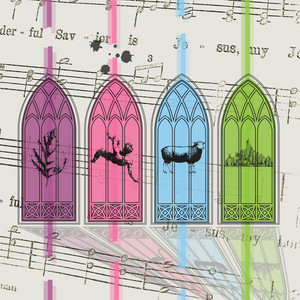
Folk Hymnal - May They Be RedeemedThe song challenges and makes you ask yourself the question, "is this my story? Is it really true?" The song is inspired by Frederick Buechner's description of the gospel as a "fairy tale that claims to be true," and we see this in the lyrics as gentle nudges to reflect and decide: "Let this story ring true, let it sing for me and you," followed by a recurring plea, "May they be redeemed." 

May this song spark introspection and help you find answers to questions about life's meaning and your place in God's story. Does this story ring true? If so, then "let it sing for me and you."

(Related scripture: Genesis 1:31; Romans 5:8; Revelation 21:4)

Connect with Folk Hymnal

Would you like to hear more CCM music? Then check out our Christian playlists on: https://www.christiandance.eu/playlists

PS: Did you know that the posts we have on Christian Music Today also contain the backstories that artists have shared with us? Check it out on: https://christianmusictoday.eu/

Popular posts

"I Stand Amazed In The Presence" by Jonathan Abel: When Everything Fails, This Holds

When life falls apart, what’s left to stand on?  At 32 years old, Jonathan Abel was in the hospital, unable to stand or walk without his heart racing above 130bpm. His nervous system was shutting down, and he didn’t know if he’d see 33. In the silence of that crisis, something broke open — not his faith, but his illusions about where his faith had been anchored. Health, strength, and the ability to fix yourself. These feel like solid ground until they aren’t. Jonathan writes that the temptation to root your identity in perfect health and great wealth is “deceivingly real.” But when everything he trusted in his own body failed, one truth held firm: Christ had already done what Jonathan could never have done for himself. This is the key message behind this song, “He took my sins and my sorrows, He made them His very own. He bore the burden to Calvary, and suffered, and died alone.” Jesus didn’t observe suffering from a distance — He absorbed it.  Romans 8:18 says it plainly: “I...

"Welcome Home" by Mary Oz: Love Is Already at the Door

What if the door you’ve been afraid to walk through has been open for you all along? “Welcome Home” by Mary Oz recalls one of the most tender stories in the Christian faith — the return of the prodigal son. His return wasn’t a march of shame, nor was it a hero’s parade. It was a quiet, tired walk back to the only place that ever truly knew and loved him. Mary wrote this song with a soft invitation, a conversational opening that builds into something victorious, with harmonies and drums leading the charge. Then settling again into that same warm, assuring, and secure invitation. A progression that mirrors the journey home.  The lyrics remind us that Jesus isn’t asking you to clean up first. “Come in, lost and wild prodigal / ‘Cos Love is waiting by the kitchen door.” There’s no courtroom here. No checklist. Just Love — patient, unhurried, already standing at the door. The broken don’t arrive here as burdens; they arrive as loved ones.  That’s the heartbeat of Luke 15:20: “But ...

"Is Anybody There? (Psalm 27)" by Stephen M. Miller: Holding On to Grace at Heaven’s Door

Stephen M. Miller's "Is Anybody There? (Psalm 27)" comes in the quiet aftermath of the Christmas celebrations, when reflection can feel like isolation. Stephen's song isn't about polishing away his mistakes, nor does it encourage you to do so with your mistakes. Stephen shares his painful experience, "I never saw it coming Lord // It felt right but it was wrong // Family and friends have left me // But I still have you and a song."   Stephen owns the fallout of his actions, taking accountability without despair. "I said it and I did it, Lord // Broke more hearts than I'll ever know // I can't fix this, though I've tried // Don't be angry, and please don't go." His song is a prayer for God's presence and guidance. "Hear me when I call you, Lord // Don't turn your face away // Don't give up on me like others have // Come help me through this day." Stephen describes a fear that we too experience when we ...